Human Factors in Digital ATC Controller Displays and Alert Design
Display design and alert hierarchy shape whether remote tower controllers make safe decisions.
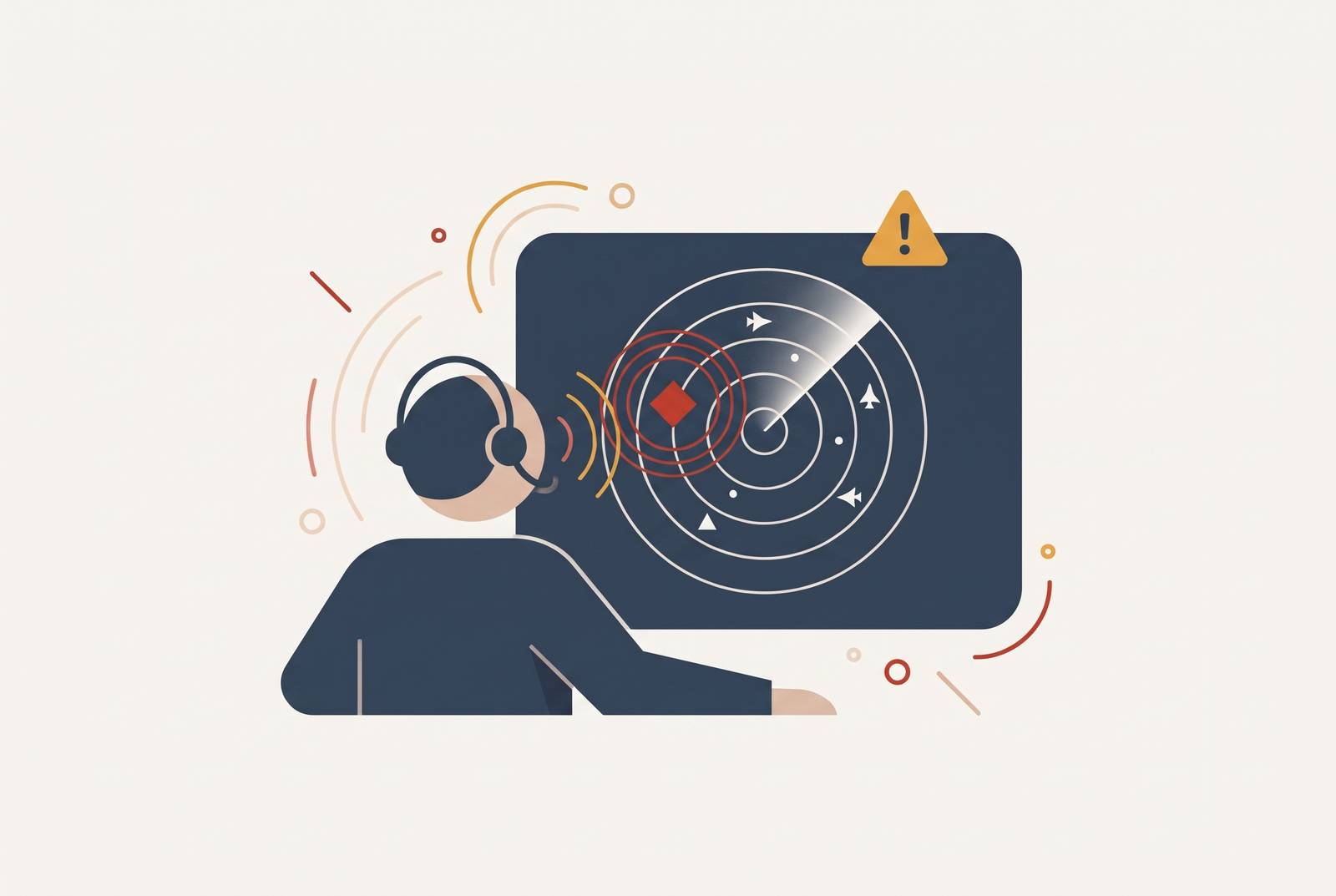
Digital ATC infrastructure for non-towered airports depends on more than cameras and sensors. Its safety function rests on a layered design that connects airfield observation, controller situational awareness, calibrated alerts, and pilot communication. For airports weighing uncrewed aircraft and drone integration, human factors engineering shapes how that information supports sound decisions, adds workload, or leads to display-induced errors.
Why uncontrolled airports face a structurally different safety problem than towered ones
At a towered airport, errors distribute across pilot deviations, operational incidents, and vehicle or pedestrian deviations. The absence of a controller eliminates the operational-incident category, concentrating risk in the remaining categories. Pilot deviation becomes nearly the default failure mode because no controller is present to catch it. Communication is a central weakness in this arrangement, since CTAF self-announcement is voluntary rather than legally required, and a meaningful share of pilots do not use it even when equipped.
Between February and May 2025, contract towers across the country closed shifts because they did not have enough certified controllers, leaving those fields to use CTAF procedures for a time. The distinction is therefore operational. Both a genuinely uncontrolled airport and an intermittently unstaffed towered airport can lack a controller actively monitoring the field.
What digital ATC towers are replacing and what they are not replacing
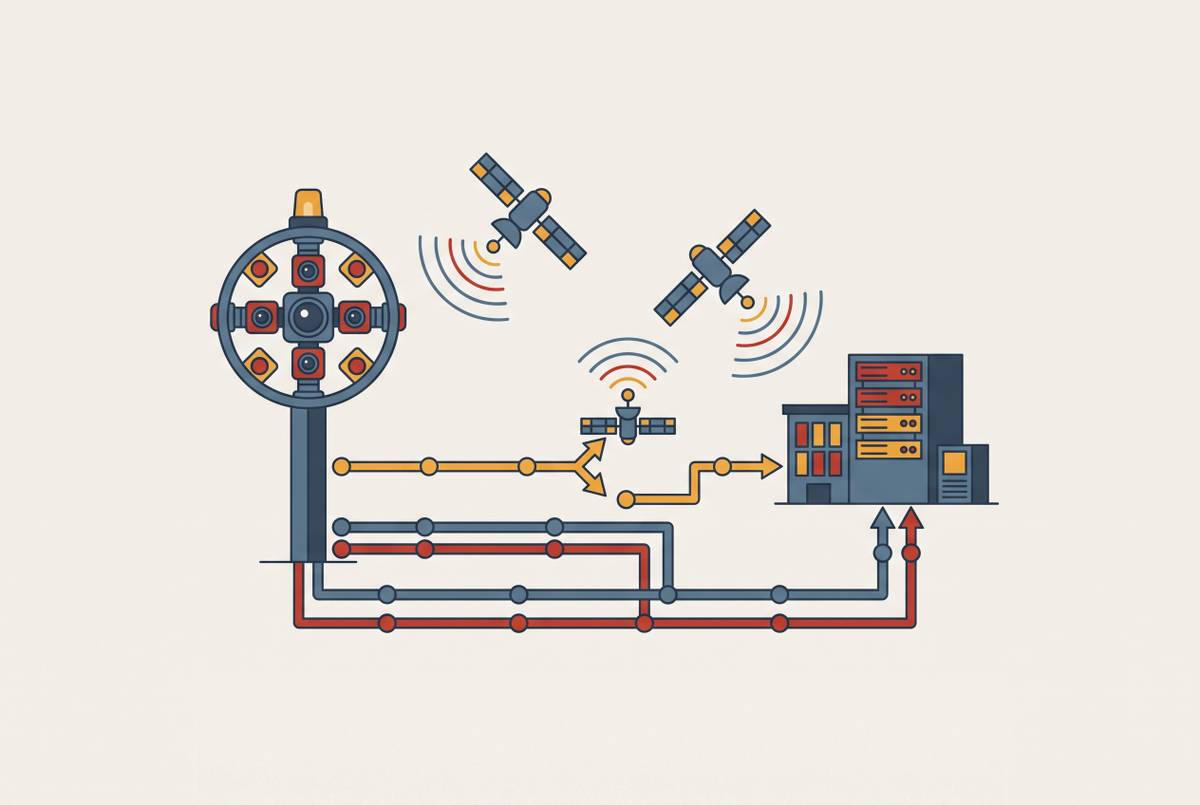
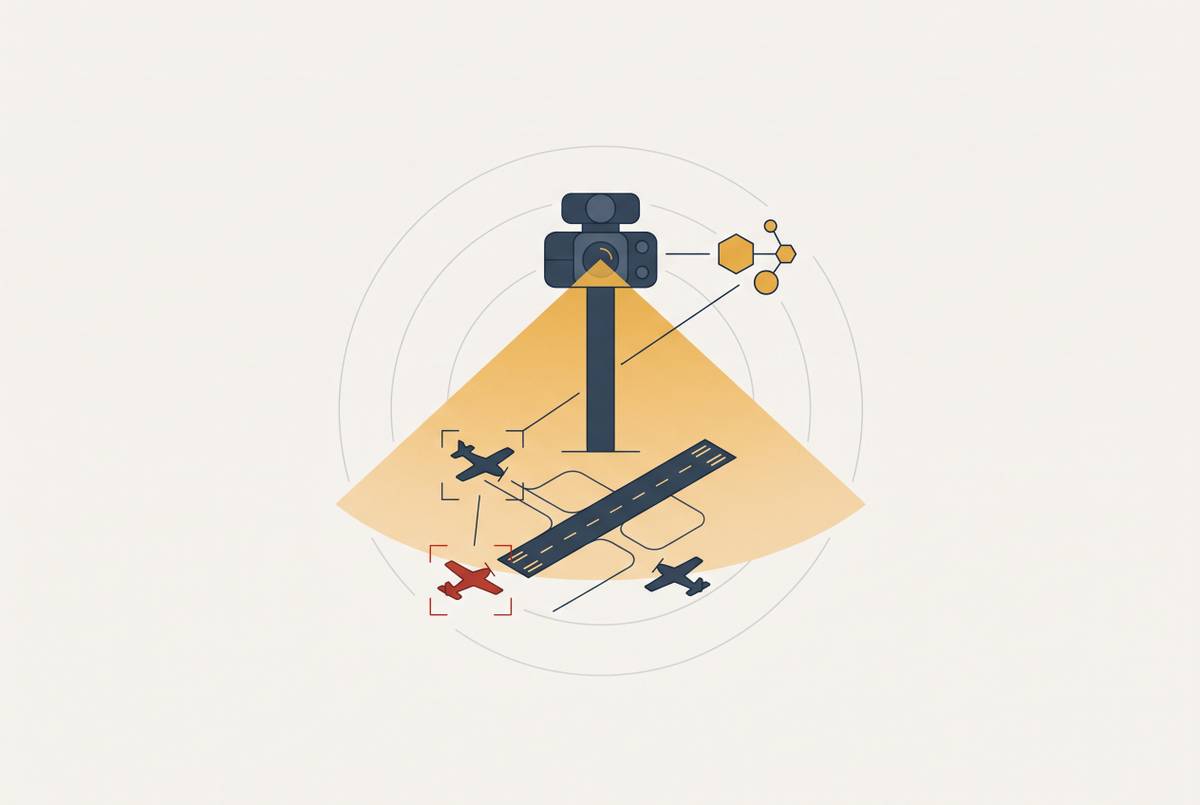
A remote tower system replaces the purpose-built physical structure with high-definition cameras, multispectral sensors, and displays that give a remotely located controller a picture of the airfield. The controller’s work remains a human task. Perception, interpretation, prioritization, and action still have to occur, but the information supporting them now arrives through a workstation.
This shift makes display design part of the safety mechanism. Research presented at ACNT 2025 found that remote tower display parameters had a significant effect on how well controllers did their work and gave researchers a basis for studying how to reduce fatigue. A digital view’s usefulness depends on the conditions under which controllers read it and the way it organizes their work.
That distinction is especially important for fields outside the established infrastructure base. The FAA’s primary runway safety programs were built around complex towered facilities, and their tools largely bypassed non-towered fields. Digital towers address a different operating context, where introducing coverage also means establishing the conditions for dependable human performance.
How the physical display environment shapes controller performance before any alert fires
The ACNT 2025 study tested eight combinations of two illuminance levels and four color temperature ranges in remote tower control rooms. It found that visual performance was best at 400 lx illuminance and a specific elevated color temperature. Departures measurably affected fatigue and visual memory performance. These were performance findings. They establish that lighting and display conditions belong in the operational specification.
The FAA REDAC Human Factors program documentation describes a program that puts FAA HF-STD-010A into use through a standard color palette, along with separate research on how to change the palette for high ambient lighting conditions. A color scheme cannot be considered independently of the light in which controllers must distinguish it. Display luminance, color temperature, and ambient illumination together establish the perceptual foundation on which software depends.
Other physical conditions affect that foundation over a shift. Off-angle viewing, flicker, blue light exposure, and viewing distance interact with perceptual capacity, with cumulative effects on fatigue and detection accuracy. The concern extends beyond physical comfort alone. Where a hub serves multiple airports, a controller may also monitor more display area than in a conventional tower, increasing the importance of a deliberately specified viewing environment.
Why situational awareness in a digital display depends on information architecture, not just screen quality
Even a physically suitable display can present the wrong information at the wrong time. Situational awareness depends on which data receive emphasis, which relationships are visible, and when information becomes available. The controller needs an accurate mental model of the airfield.
The FAA’s human factors R&D program identifies “identifying relevant safety critical information needed, the appropriate timing for distribution, and the most appropriate presentation for usability” as a core multi-year research challenge. That formulation connects content, timing, and presentation. In a remote tower, the connection is particularly consequential because controllers cannot supplement the screen with a direct visual scan of the field. An omission in the display has no direct-view fallback.
The same program’s capability-utilization research documents human factors causes of underuse and misuse of new ATC capabilities. Technical availability does not guarantee operational adoption. Information architecture has to fit the controller’s working mental model, or capabilities intended to improve awareness can instead be worked around. Alerts inherit this requirement because they ask the controller to interpret a change within that model.
How the Signal Design Framework structures alarm and alert creation in ATC
The University of Chicago’s May 2025 Signal Design Handbook, developed for the FAA, provides a Signal Design Framework for creating and modifying ATC alarms, alerts, and warnings. It combines structured interviews with operational subject matter experts, including controllers, and an objective scoring sheet. The resulting specifications can guide either a new signal or a revision. Operational knowledge becomes an explicit design input rather than an informal comment made after implementation.
The framework gives controllers, designers, and engineers a common language for describing and evaluating signals. Its principal variables include modality, priority, saliency, and disruptiveness. Each answers a different operational question. Modality concerns the sense a signal engages, priority expresses urgency, saliency describes how readily it stands out, and disruptiveness concerns how much it interrupts ongoing work.
Those variables cannot be optimized independently. A visual signal combined with a tactile signal can be more noticeable and communicate greater urgency, while also producing more annoyance. The framework makes that trade-off part of the design process. It was tested and validated during development of a microburst alarm and a trajectory conformance alarm, providing concrete cases in which the method supported signal creation rather than remaining a general statement of principles.
Why alert hierarchy and the balance between urgency and overload determine whether controllers respond correctly
Alert hierarchy is a behavioral design problem. Controllers build response patterns as they encounter signals again and again at work. Those patterns can support or erode the intended hierarchy. When most alerts are low-urgency, or signals keep flagging conditions controllers have already taken into account, controllers can start treating all alerts as lower priority.
The handbook’s disruptiveness dimension weighs how much a signal interrupts work against what it asks the controller to do. More forceful presentation is not inherently safer if it interrupts work without a commensurate safety benefit. Multimodal signals, whether visual and tactile or visual and auditory, require calibration to the appropriate tier and operating conditions because their greater noticeability also increases annoyance.
This balance becomes harder where a digital tower presents simultaneous feeds and a wider range of alert types. The controller’s workload is the shared constraint. The FAA’s NTSB AIR-18-01 response work looked at which safety-critical information controllers need, when to send it, and how to show it in a usable form, since how well it works depends on more than content. A safety signal also has to arrive at a moment and in a form that supports an appropriate response.
How AI-generated advisories change the display design problem and what the FAA guidance requires
An AI-generated conflict resolution advisory asks more of the controller than recognition of an urgent condition. It presents a recommendation that requires evaluation. The design task is therefore different from making a conventional alarm detectable, because the controller must retain the ability to reach an independent conclusion.
The FAA guidance recommends first showing controllers all the information they need to do the task without automation, then showing the AI recommendation as a separate source. That recommendation functions as a redundancy check. It can draw attention to additional relevant information or an alternative conclusion without displacing the controller’s analysis. The display must support both layers and make clear which information is operational or sensor data and which is AI-generated advice.
This separation also preserves the distinction between a recommendation and the evidence needed to judge it. The FAA’s human-machine teaming research aimed to develop guidance on how controllers can manage and communicate with AI-based automation, treating this as a distinct skill. Its complementary-design premise is that AI informs and augments perception and cognition rather than substituting for them, and the display architecture must make that relationship workable.
What multimodal communication research shows about reducing pilot-side ATC miscommunication
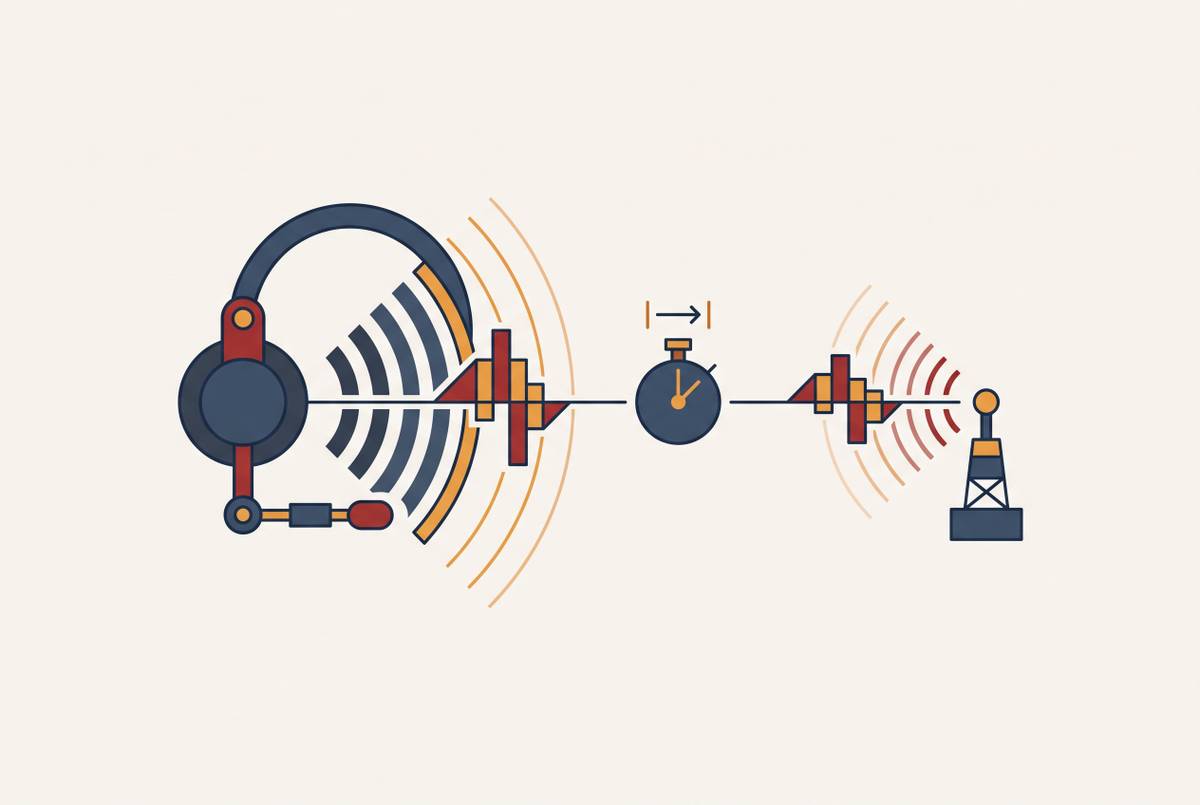
The communication loop remains vulnerable after the controller has interpreted the display and selected an action. Pilots can miss, mishear, or misinterpret verbal instructions, especially under high workload. Instructions that are longer and harder to follow add cognitive load. Pilot-facing visual support addresses this parallel problem by making the instruction available through another channel rather than relying entirely on a transient radio exchange.
The ATCion study, published at UIST 2025 by researchers from the University of Waterloo, Georgia Institute of Technology, and the Hong Kong University of Science and Technology, examined icon-based in-cockpit aids through four iterative design phases involving 22 pilots and one ATC controller. The study compared icons with text-based aids and with no visual aids. ATCion improved readback accuracy and reduced memory workload without negatively affecting flight operations. Most participants preferred the icons because they were clear, had low cognitive cost, and were quick to interpret.
The study draws on redundancy gain, in which the same information comes through both auditory and visual channels. Presentation still determines the cost of using that redundancy. The icon-based approach outperformed text because icons offered lower cognitive cost and faster interpretation under pressure, and the study produced design principles and visual components for ATC messages. For pilots who otherwise keep track of traffic themselves through CTAF, this support eases the work of processing instructions from a digital tower or another ATC source while leaving self-announcement in place.
What good human factors practice in digital ATC design actually requires from system developers
The development implication is that human factors work must begin before requirements are set and continue through operational validation. It cannot be confined to a final usability review. The FAA’s human factors R&D program links the early use of human factors processes during acquisition to lower human factors risk and a better chance that the system will be put into use successfully. It also identifies design and engineering rework as a consequence those processes help avoid.
For developers, the first requirement is to specify the physical display environment against validated ergonomic parameters rather than leave luminance, color temperature, and ambient lighting to hardware defaults. Information architecture must then support independent situational awareness, with automated recommendations presented as a clearly distinguished second layer. A controller needs usable evidence before a recommendation can function as an independent check.
To develop signals, operational controllers, designers, and human factors specialists need to work together through a structured process, using interviews and objective scoring to turn what they know from the work into specifications. Modality and disruptiveness must be calibrated to the actual operating context. Pilot communication belongs within the same design responsibility. The controller and pilot form a single communication system, and a failure at either end can contribute to an incursion.
For small airports weighing digital ATC infrastructure, including those considering nearby uncrewed aircraft operations, these human-performance criteria set out what people need to do their work safely, but do not prove drone-integration capability. The distinction prevents display sophistication from standing in for an operational safety case. Where the alternative is no ATC coverage, there is no controller-based fallback outside the new system. The quality of its display and alert design is the mechanism by which the safety gap either closes or persists.
Sources
- NAxtGEN REDAC / Human Factors Air Traffic Control / Technical Operations
- ATCion: Exploring the Design of Icon-based Visual Aids for Enhancing In-cockpit Air Traffic Control Communication
- 2026-99-1847: Optimization of the Light Environment for the Remote Control Tower Humancomputer Interaction Interface Based on Ergonomics - Technical Paper
- TECHNICAL REPORT DOCUMENTATION PAGE 1. REPORT NO. 2. GOVERNMENT ACCESSION NO.
- REDAC / Human Factors Air Traffic Control / Technical Operations Human Factors