Wrong-Surface Landing Risk at Airports Without ATC
Pilots lack external checks against visual errors at most U.S. airports.
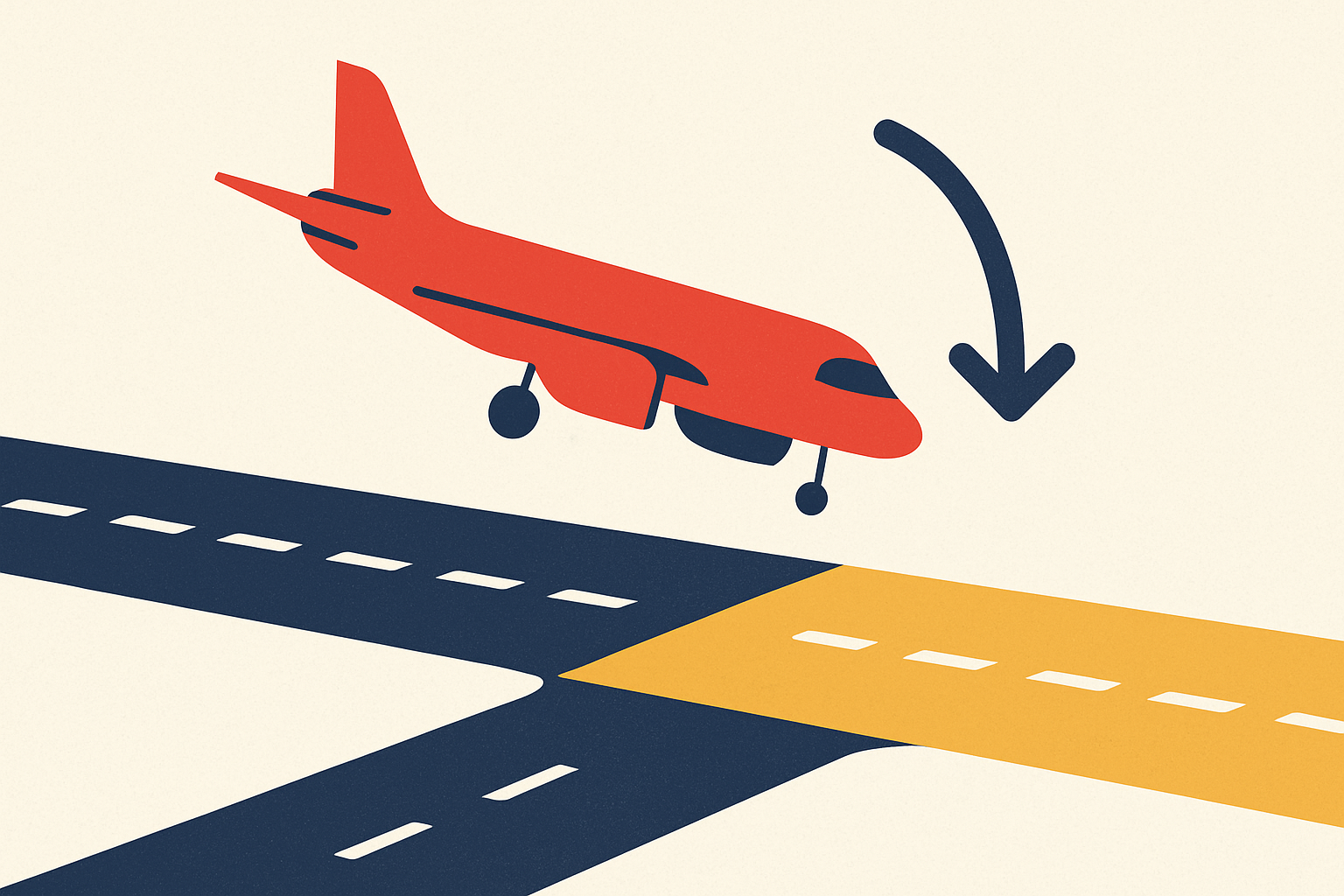
A wrong-surface landing begins long before an aircraft touches down. The error forms during final approach, in the seconds when a pilot locks onto a runway, a taxiway, or even an entirely different airport, because it resembles the intended destination closely enough to pass a quick visual check. This makes the hazard unusual among runway risks: a pilot can read back a clearance word for word, correctly and in good faith, and still fly the airplane onto the wrong strip of pavement. The failure is perceptual and spatial, not procedural, and no amount of correct radio phraseology prevents it.
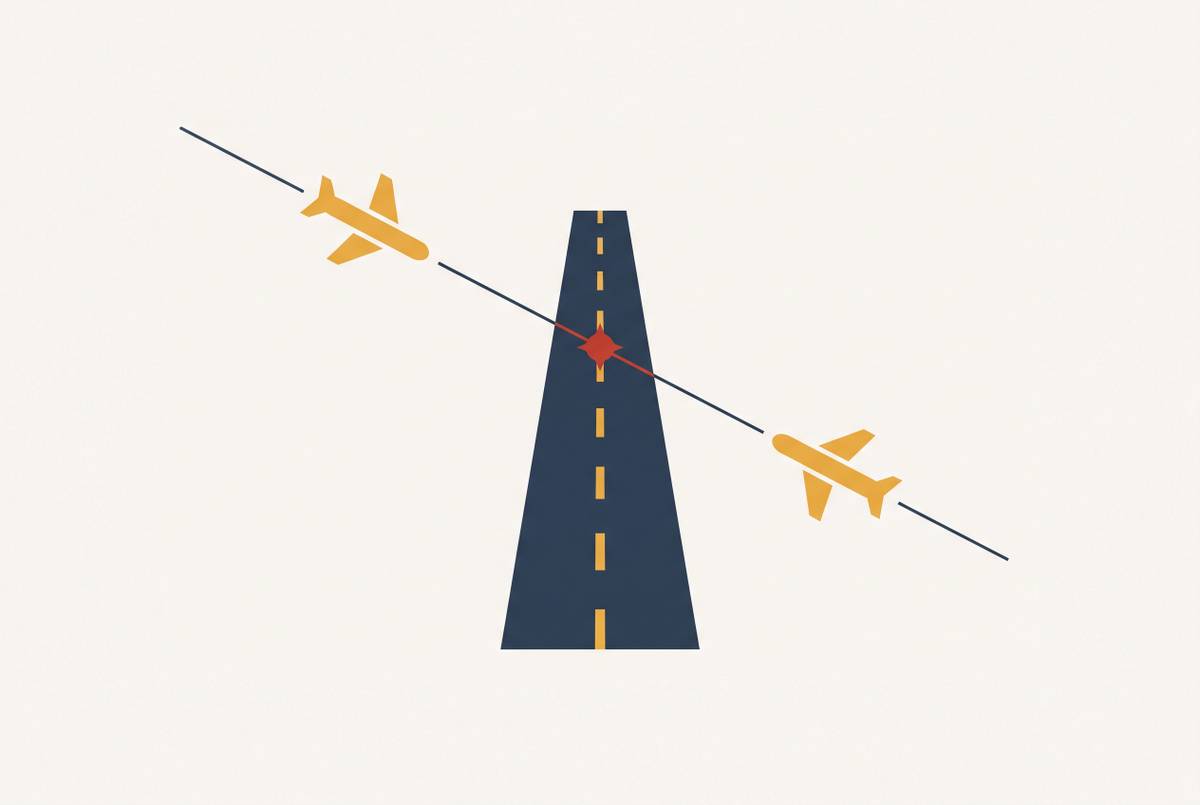
Airport geometry makes the problem worse at specific locations. Parallel runways with staggered thresholds are a recurring cause, because the visual picture they present from the air can trick even a careful eye into lining up with the wrong one. By the time this becomes visible to the pilot, the airplane is typically low, slow, and fully configured for landing, which is the phase of flight with the least room to recover from a mistake. There is little altitude to trade for a go-around decision and little time to second-guess what the eyes are reporting.
A wrong-airport landing works the same way, but it adds a second layer of danger. The runway the pilot ends up on may be too short for the aircraft type, built for lighter traffic, or simply not equipped to handle the weight and speed involved. Nobody on the ground is expecting the arrival, so none of the ordinary preparations, whether that's clearing the runway, alerting ground crews, or simply watching for the aircraft, are in place. The hazard is not a rare edge case bolted onto ordinary runway safety work. It sits at the center of final approach itself, where the margin for error is thinnest and the consequences of a bad guess are largest.
The human factors that make wrong-surface errors so hard to eliminate through pilot training alone
The conditions that produce wrong-surface errors appear in pilots at every experience level, regardless of training, because unfamiliarity, distraction, and glare affect novices and veterans alike. Unfamiliarity with an airport's layout, a moment of distraction in the cockpit, and sun glare on the windshield are documented causes, and none of them discriminates by logged flight hours or certificate type. A ten-thousand-hour airline captain and a pilot flying a small rented single-engine aircraft for the weekend are equally subject to the same visual illusions created by parallel runways or a bright afternoon sun low on the horizon.
Research published in Safety Science found that miscommunication runs through a large share of runway incursion events, and the study's authors noted something uncomfortable for anyone hoping that better procedures alone will fix the problem: aviation professionals themselves recognize a gap between what safety policy intends and what actually happens once a technical countermeasure gets implemented in daily operations. Good intentions written into a manual do not automatically translate into a pilot catching their own error in real time.
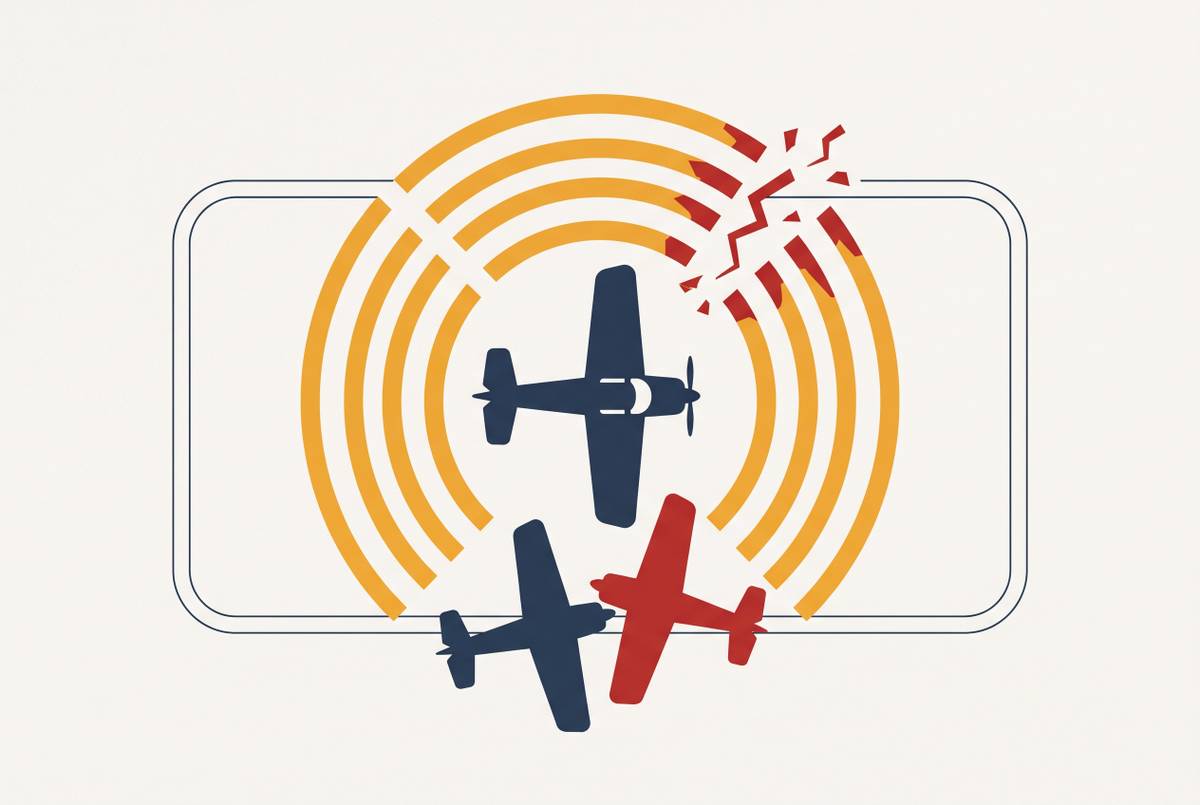
A pilot already headed for the wrong surface has no reliable way to notice the mistake from inside the cockpit. A pilot on the wrong frequency, unfamiliar with the airport, is not going to self-correct, because there is no external reference point telling them their alignment is off. At non-towered airports, self-announcement only works if other pilots are nearby, tuned to the correct frequency, and actually listening at the right moment. None of those three conditions is guaranteed, and if even one is missing, the safety net built around pilot-to-pilot communication fails, a gap rooted in the structure of the system itself, a predictable outcome of asking human perception to do a job it was never built to do without outside verification, pointing toward the need for a check that sits outside the cockpit.
The tower controller as the last reliable check against a misaligned approach
At a towered airport, a controller provides exactly the outside reference point that a pilot in the air cannot generate alone. The controller watches the approach unfold from a fixed position, with full knowledge of which runway was actually assigned, and can compare that assignment against what radar and the view from the cab actually show. When those two pictures don't match, the controller is positioned to intervene before the aircraft gets anywhere near the ground.
The FAA built this function directly into new technology with the Approach Runway Verification tool, announced in March 2024. ARV gives controllers visual and audible alerts the moment an approaching aircraft appears lined up with the wrong runway or the wrong airport. The tool does not replace the controller's judgment. It sharpens the controller's judgment, flagging a mismatch between the issued clearance and the aircraft's actual track so the controller can act on it immediately.
At the time of the March 2024 announcement, ARV was installed at towers serving 13 airports: Austin (AUS), Lincoln Tower (LNK), Elton Hensley (FTT), Lansing (LAN), DuPage (DPA), Chicago Executive (PWK), Tallahassee (TLH), Cedar Rapids (CID), Branson West Municipal (FWB), Gerald Ford International (GRR), Elkhart Municipal (EKM), South Bend (SBN), and M. Graham Clark Downtown Airport (PLK). Deployment has expanded considerably since, reaching more than 77 airports by early 2025, with further rollout planned.
ARV doesn't operate alone. The Runway Incursion Device and the Surface Awareness Initiative round out the FAA's surface safety portfolio, and all three share one requirement: a staffed tower to make use of them. The FAA's Wrong Surface Landing Event Safety Task Force works the same way, and so does the collaborative work it does with local airport authorities. Recommendations coming out of that task force only turn into action if there's a controller on-site to carry them out. Every layer of this system, technological and institutional alike, is built around the presence of a human controller watching the approach.
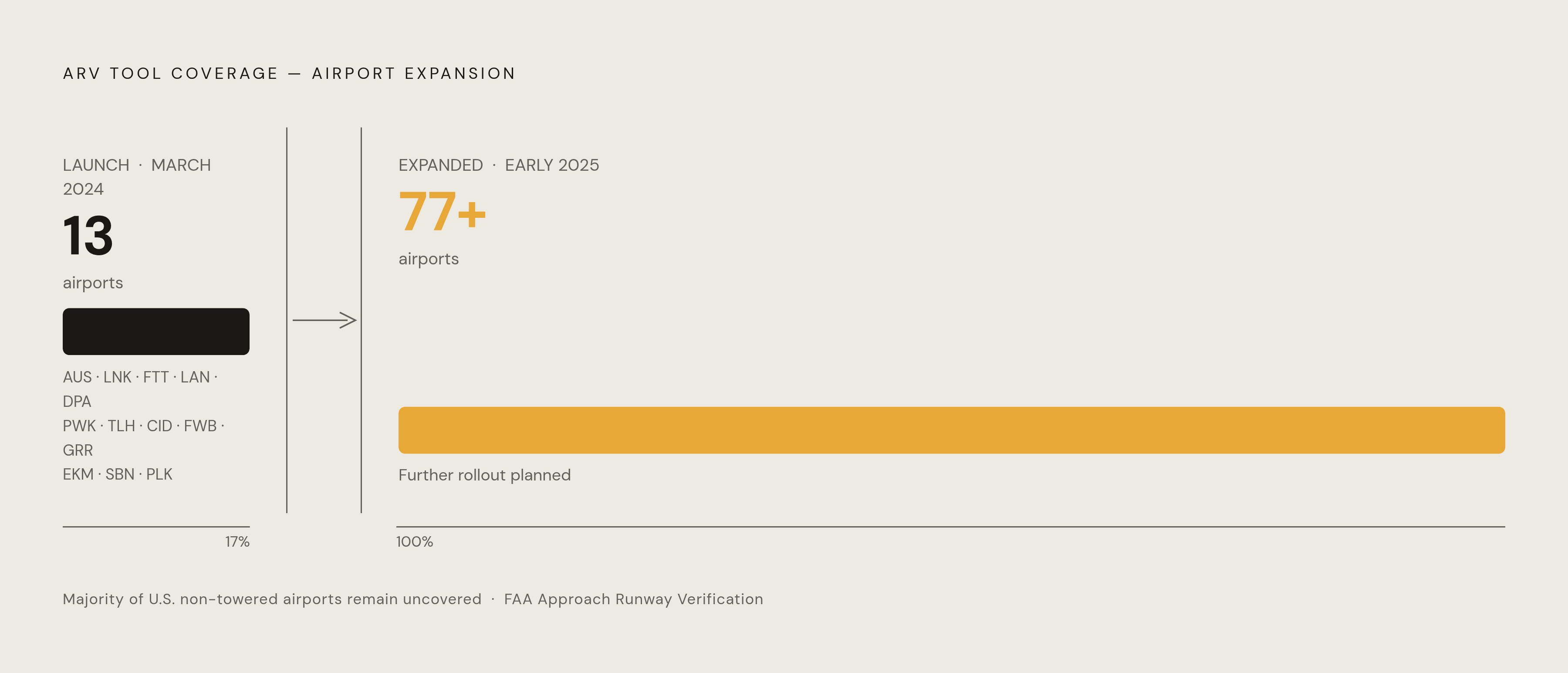
The scale of the coverage gap: how many airports have no controller to perform this function
The United States has about 527 towered airports, but it has hundreds of non-towered landing facilities spread across the country. The protections described in the previous section exist at a minority of U.S. airports, and most American airspace geography operates with no controller-based check on wrong-surface risk.
At those non-towered facilities, none of the FAA's surface safety tools can do anything. No ARV alert fires, no RID warns anyone, no SAI screen lights up, because there is no controller position for any of those systems to report to. The tools work exactly as designed everywhere they're installed. They simply have nowhere to operate at the airports that make up most of the national map.
Pilot deviation remains the most commonly recorded cause of runway incursions, and a federal watchdog agency, in a March 2025 audit, found that the FAA lacks an integrated way to analyze its own incursion data. Causal information isn't fully available, and it isn't shared freely across the agency, so the kind of full-scale trend analysis that would help target where coverage is most urgently needed can't happen. The same audit found that the FAA had implemented only five of the recommendations issued by an independent Safety Review Team as of October 2024. The shortfall is also about how slowly even agreed-upon fixes move from recommendation to deployment.
Thousands of controller positions remain unfilled nationally, and that shortage constrains how far the FAA's Contract Tower Program can realistically extend coverage to smaller airports. Tower additions and replacements get slowed or halted by staffing deficits and budget constraints, which matters here only because it explains why the traditional route to closing this gap, simply staffing more towers, has not closed it.
The traditional manned tower as an unrealistic answer for most non-towered airports
Building a conventional tower is expensive enough, and demands enough staff, that most non-towered airports are effectively disqualified from that path before they ever reach the application stage. Two North Carolina airports illustrate the pressure this creates. Johnston Regional Airport and Raleigh Executive Jetport have each won FAA approval to build an ATC tower, and both want digital remote tower technology instead of conventional construction, but for now they're moving ahead with traditional building plans while they wait for the FAA to approve the remote-tower option. Johnston Regional Airport Director David Harris has estimated that a digital remote tower costs about half what a conventional tower costs, and has said he believes the digital option would also be safer.
Leesburg Executive Airport in Virginia shows that even working technology can still be lost. Leesburg operated the first municipal remote tower in the United States from 2018 to 2023, running it successfully for roughly eight years before the project was abandoned. Leesburg Executive is now without any ATC service at all unless funding can be found to build a conventional tower instead. The airport didn't lose the remote tower because the technology failed. It lost it because there was no durable regulatory pathway keeping the program alive.
That pathway is the actual obstacle. Only digital tower systems that complete the FAA's System Design Approval process get added to the FAA Approved Systems for Non-Federal Use List, and no system has yet cleared that bar in the United States. Airports are being asked to walk a road that is structurally blocked for nearly all of them: conventional towers cost too much and need too much staff to build at the scale the coverage gap requires, and the one alternative built to fit smaller airports' budgets has no finished certification path to let it through the door.
Digital tower technology, purpose-built for this coverage problem
Digital towers replicate what a conventional tower delivers, and in some respects go beyond it, while asking far less in construction and staffing commitment than a physical cab bolted onto a mast. The core idea swaps the controller's line-of-sight view out a window for panoramic camera feeds, sensors, and data overlays fed to a screen, wherever that screen happens to sit.
At Airspace World in Lisbon in May 2026, Atrak, a subsidiary of Czechoslovak Group, unveiled its MAESTRO Digital Remote Tower platform, built around advanced camera systems, sensors, and AI. The platform is currently being validated at Václav Havel Airport Prague, with more than 18 months of real-time operational testing behind it, and is described as giving controllers situational awareness equal to or better than what a conventional tower cab provides.
Western Sydney International Airport shows this is not a stopgap measure reserved for small or aging facilities. The airport is preparing for cargo operations starting July 26, 2026, followed by passenger operations starting October 25, 2026, and it was built from the ground up as a new international airport designed around digital air traffic control from day one. Controllers will manage the runway from a facility roughly 20 kilometers away. A brand-new international gateway chose this approach deliberately, so you can see digital tower technology is being treated as legitimate core infrastructure, not merely a workaround for airports that can't afford anything better.
The specific wrong-surface protection a digital tower provides that uncontrolled airports currently lack
A digital tower restores the one piece of the safety picture that uncontrolled airports are missing: a trained controller, positioned with full situational awareness, who can act before an aircraft reaches the ground. The controller function at a digital tower carries the same legal and operational authority as at a conventional one. The position can issue clearances, call for a go-around, and query a pilot directly about an approach that looks misaligned.
The camera systems and sensor suites behind a digital tower, including infrared capability for night and low-visibility conditions along with augmented reality overlays, give the controller visual coverage that can match or exceed what a physical tower cab offers on many approach angles. That matters directly for ARV's deployment limits: the FAA's verification tool cannot be deployed at a non-towered airport today, because there is no controller position to receive its alerts. Installing a digital tower changes that equation by creating the human-in-the-loop the technology was designed to support.
The same logic applies to the FAA's Wrong Surface Landing Event Safety Task Force and its local work with airport authorities. Both depend on a controller being present to put recommendations into practice, and at a non-towered airport, those recommendations currently have no one to carry them out. A digital tower doesn't eliminate wrong-surface risk, and nothing in its design claims to. It puts back the minimum safeguard, a controller watching the approach with the authority to intervene, that the hazard described at the start of this piece depends on being absent.
The U.S. regulatory impasse facing airports waiting for this protection
The technology needed to close this gap already exists and is already running in operational conditions abroad. What's missing in the United States is a finished certification path that would let any of it reach the airports that need it. No digital tower system has finished the FAA's System Design Approval process yet, so none appears on the FAA Approved Systems for Non-Federal Use List, and airports like Johnston Regional and Raleigh Executive Jetport have to keep pursuing conventional tower construction as a parallel track just so they don't lose more time.
Leesburg Executive Airport's experience shows what's at stake in that delay. Eight years of working remote tower operation disappeared because no durable regulatory framework existed to keep it funded and operating. Every non-towered airport in the country today is waiting on the same missing piece of regulatory architecture, while continuing to operate without the controller-based check that wrong-surface prevention has always depended on. The technology is ready. The certification pathway is not, and that absence carries real safety consequences for every uncontrolled airport operating in the meantime.